
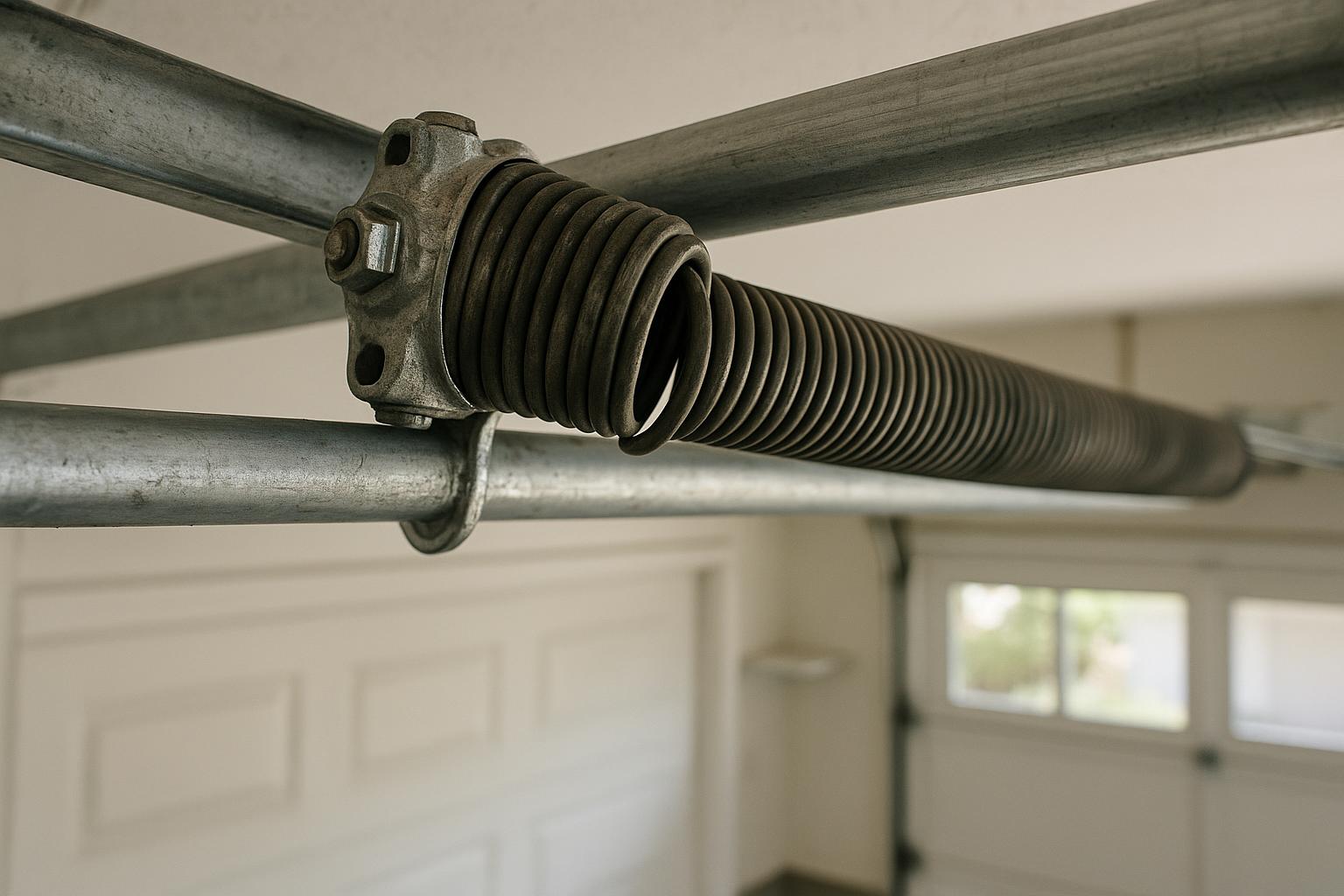
Your Garage Door Springs Are Working Harder Than You Think
Every time you open and close your garage door, the springs do the heavy lifting — literally. A standard residential garage door weighs between 130 and 350 pounds, and the springs are responsible for counterbalancing all of that weight. Most homeowners in Kingsburg use their garage door at least four times a day, which adds up to over 1,400 cycles per year.
Garage door springs are rated for a specific number of cycles, typically between 10,000 and 20,000 depending on the type and quality. That means even a well-made spring has a finite lifespan. The good news is that springs rarely fail without warning. If you know what to look for, you can catch the problem early and schedule a replacement before you're stuck with a door that won't open on a Monday morning.
The Two Types of Garage Door Springs
Before we talk about warning signs, it helps to understand which type of springs your garage door uses.
Torsion Springs
These are mounted horizontally above the garage door opening. They use torque to lift the door and are the more common type found in modern residential installations. Torsion springs tend to last longer and provide smoother operation.
Extension Springs
These run along the horizontal tracks on either side of the door. They stretch and contract to help lift and lower the door. Extension springs are typically found on older or lighter garage doors and are generally less expensive but may wear out faster.
Regardless of which type you have, the warning signs of impending failure are similar. Here's what to watch for.
7 Warning Signs Your Garage Door Springs Are Failing
1. The Door Feels Heavier Than Usual
Try this simple test: disconnect your garage door opener by pulling the emergency release cord, then manually lift the door about halfway. A properly balanced door should stay in place on its own. If it feels unusually heavy, slides back down, or requires significant effort to lift, your springs are likely losing tension and nearing the end of their life.
2. The Door Opens Unevenly or Crooked
If one side of your garage door rises faster than the other, it could mean one spring is weaker than its counterpart. This is especially common with extension spring systems where each side operates somewhat independently. An uneven door puts extra stress on the tracks, rollers, and opener, which can lead to additional damage if not addressed.
3. You Hear Loud Squeaking or Popping Sounds
Some noise during operation is normal, but new or worsening sounds deserve attention. Loud squeaking, grinding, or popping noises can indicate that the spring coils are rubbing, binding, or beginning to separate. If you hear a sudden loud bang from your garage — almost like a firecracker — a spring may have already snapped.
4. Visible Gaps in the Spring Coils
Take a look at your torsion spring above the door. A healthy spring has tightly wound coils with no visible gaps. If you notice a gap or separation in the coils, the spring has likely broken. Even a small gap means the spring can no longer function properly and needs immediate replacement.
5. The Door Slams Shut or Closes Too Fast
Springs control the speed at which your door opens and closes. When they lose tension, the door may drop faster than it should during closing. This is more than an inconvenience — it's a serious safety hazard, especially for families with children and pets. If your door is closing noticeably faster than it used to, have your springs inspected right away.
6. The Opener Is Straining
Your garage door opener is designed to work with the springs, not replace them. When springs weaken, the opener has to compensate by working harder. You might notice the motor running louder, the door opening more slowly, or the opener stopping partway through the cycle. Continuing to use a strained opener can burn out the motor, turning a spring replacement into a much more expensive repair.
7. Rust and Corrosion on the Springs
Here in the Central Valley, our climate is generally kind to metal components, but dust, moisture, and temperature swings can still take a toll over time. If you see rust forming on your springs, it's accelerating wear. Rust increases friction between the coils and weakens the metal, reducing the spring's overall lifespan. Regular lubrication can slow this process, but heavily corroded springs should be replaced.
Why You Should Never Replace Garage Door Springs Yourself
We understand the DIY spirit — many Kingsburg homeowners are handy and capable. But garage door springs are under extreme tension and can cause serious injury or even death if handled improperly. Torsion springs in particular store a tremendous amount of energy, and one wrong move during removal or installation can send metal flying.
Professional technicians have the specialized tools, training, and experience to replace springs safely and correctly. They'll also ensure the new springs are properly sized and calibrated for your specific door, which is critical for smooth operation and longevity.
How Long Should Garage Door Springs Last?
The lifespan of your springs depends on several factors:
- Cycle rating: Standard springs are rated for about 10,000 cycles. High-cycle springs can last 25,000 cycles or more.
- Frequency of use: A household that opens the door six times a day will wear out springs faster than one that uses it twice daily.
- Maintenance: Springs that are lubricated regularly and part of a preventive maintenance routine will generally last longer.
- Quality of installation: Properly installed springs with the correct specifications for your door will outperform generic or incorrectly sized springs.
For most families in Kingsburg and surrounding communities like Selma, Fowler, and Reedley, springs typically last between seven and twelve years. If your garage door is approaching that age range, it's worth having a professional inspection.
What to Do If You Suspect Your Springs Are Failing
If you've noticed any of the warning signs above, here's what we recommend:
- Stop using the door if it's visibly damaged, making alarming noises, or closing too fast. Use your front door until the issue is resolved.
- Don't attempt to fix it yourself. The risk of injury is real and not worth the savings.
- Call a local professional. A trained technician can inspect the springs, assess the overall condition of your door system, and recommend the right solution.
At Kingsburg Garage Door, we handle spring replacements every week. We carry a range of spring types and sizes so we can usually complete the job in a single visit. We also offer preventive maintenance plans that include spring inspection and lubrication, helping you avoid unexpected failures down the road.
Don't Wait for the Snap
A broken garage door spring is one of the most common — and most preventable — garage door emergencies we see. By paying attention to the warning signs and scheduling timely maintenance, you can avoid the inconvenience of being locked out of your garage and the higher cost of emergency service.
If your garage door isn't acting right, or if it's been a few years since your last inspection, give us a call. We're here to help homeowners throughout Kingsburg and the Central Valley keep their garage doors running safely and smoothly.