
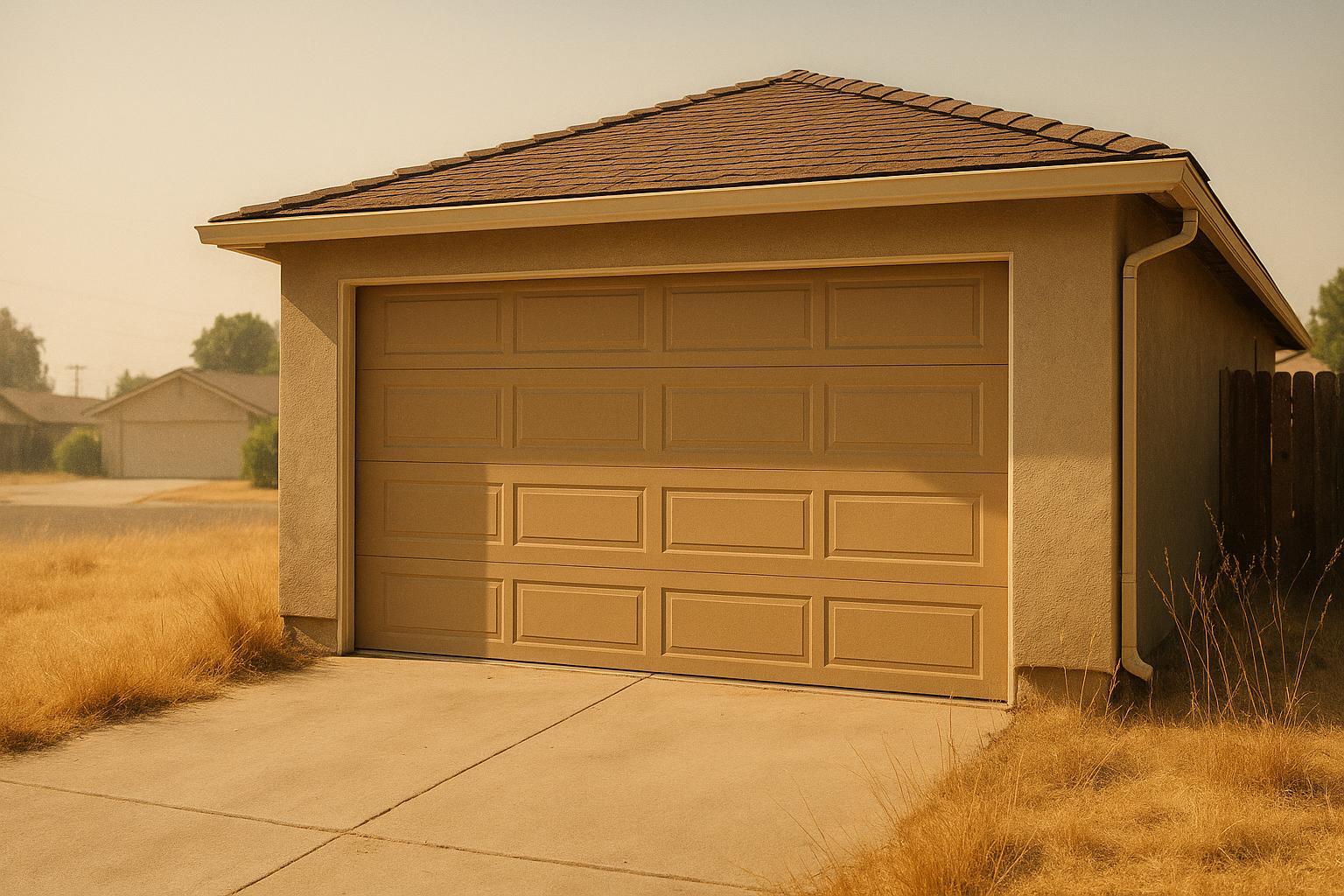
Your Garage Door Battles the Central Valley Climate Every Day
Living in Kingsburg and the surrounding Central Valley means enjoying long summers, mild winters, and plenty of sunshine. But the same climate that makes this region great for agriculture can be surprisingly tough on your garage door. From triple-digit summer heat to chilly winter mornings and ever-present dust, your garage door faces environmental stress that homeowners in milder climates never have to think about.
Understanding how local weather conditions affect your garage door — and what you can do about it — can save you from unexpected breakdowns, costly repairs, and premature replacements. Let's break it down season by season.
Summer Heat: The Silent Garage Door Killer
If you've lived through a Kingsburg summer, you know that temperatures regularly climb above 100°F from June through September. That extreme heat affects your garage door in several ways:
- Metal expansion: Steel garage doors, tracks, and hardware expand in the heat. Over time, repeated expansion and contraction can warp tracks, loosen bolts, and cause misalignment. If your door starts sticking or making new noises during summer, thermal expansion could be the culprit.
- Weatherstripping deterioration: The rubber seals along the bottom and sides of your garage door dry out and crack much faster in extreme heat. Once those seals fail, dust, insects, and hot air pour into your garage — raising your energy bills and making the space uncomfortable.
- Opener strain: Your garage door opener works harder when components are heat-swollen and friction increases. This can shorten the lifespan of your motor, especially if it's an older model that's already working near capacity.
- Fading and peeling: Prolonged UV exposure causes paint to fade, peel, and blister on wooden and steel doors alike. Beyond being an eyesore, damaged paint exposes the door material to moisture and further weather damage.
To combat summer heat, make sure your garage is ventilated, consider a door with insulation (R-value of 12 or higher is ideal for our area), and schedule a maintenance check before the hottest months arrive.
Winter Cold Snaps and Morning Frost
While Kingsburg winters are mild compared to much of the country, temperatures can dip into the 30s on cold mornings — especially in December and January. Those chilly mornings create their own set of problems:
- Metal contraction: Just as heat causes expansion, cold causes metal parts to contract. This can lead to gaps in the track, stiff springs, and a door that feels sluggish or uneven first thing in the morning.
- Lubricant thickening: The grease and lubricant on your springs, rollers, and hinges can thicken in cold weather, making the door harder to open and putting extra strain on your opener.
- Condensation and moisture: Temperature swings between cold nights and warm days create condensation inside your garage. That moisture can cause rust on springs, hinges, and tracks — particularly on doors that haven't been properly maintained.
A simple fix for winter issues is to apply a silicone-based lubricant to all moving parts before cold weather sets in. Unlike petroleum-based products, silicone lubricant won't thicken in lower temperatures.
Dust and Air Quality: A Year-Round Challenge
Anyone in the Central Valley knows about dust. Agricultural activity, dry soil, and wind create a constant layer of fine particulate matter that settles on everything — including your garage door system. Here's why that matters:
- Track buildup: Dust and grit accumulate in your garage door tracks, creating friction that forces the door off its smooth path. Over time, this can cause the door to bind, jump, or even derail.
- Roller wear: Nylon and steel rollers pick up dust and debris, which acts like sandpaper against the track. This accelerates wear and can lead to noisy, rough operation.
- Sensor obstruction: The safety sensors at the base of your garage door opening can be blocked or confused by a layer of dust. If your door reverses unexpectedly or refuses to close, dirty sensors are one of the first things to check.
Wiping down your tracks with a damp cloth every few months and keeping the sensor eyes clean are easy maintenance tasks that go a long way in our dusty environment.
Tule Fog and Moisture Concerns
From late fall through early spring, the Central Valley is known for its thick tule fog. While it's a familiar part of life in Kingsburg, Selma, Fowler, and the surrounding communities, that persistent moisture can cause real problems for garage doors:
- Rust and corrosion: Extended exposure to damp, foggy conditions accelerates rust on springs, cables, brackets, and any exposed metal. Rust weakens these components and can lead to sudden failure — especially dangerous with high-tension springs.
- Wood rot: If you have a wooden garage door, prolonged moisture exposure during fog season can cause swelling, warping, and eventually rot. Keeping the door sealed and painted is essential.
- Electrical issues: Moisture can affect your garage door opener's circuit board and wiring. If your opener starts behaving erratically during fog season, moisture intrusion could be to blame.
Applying a rust-inhibiting spray to metal components before fog season and ensuring your garage has adequate drainage around the door opening can help prevent moisture-related damage.
How Preventive Maintenance Protects Your Investment
The good news is that most weather-related garage door problems are preventable with regular maintenance. A professional tune-up typically includes:
- Inspecting and tightening all hardware
- Lubricating springs, rollers, hinges, and tracks
- Checking weatherstripping and replacing worn seals
- Testing the balance and alignment of the door
- Inspecting cables and springs for signs of rust or wear
- Cleaning and aligning safety sensors
- Testing the auto-reverse safety feature
We recommend scheduling maintenance at least twice a year — once before summer and once before winter — to keep your door running smoothly through the most demanding seasons.
Don't Wait for a Breakdown
Your garage door is one of the most-used entry points in your home, and in a climate like ours, it takes a beating year-round. Whether you're dealing with a door that's sluggish on cold mornings, weatherstripping that's crumbling in the heat, or rust creeping in after fog season, addressing small issues early prevents big problems later.
At Kingsburg Garage Door, we understand the unique challenges that Central Valley weather puts on your garage door. We serve homeowners throughout Kingsburg, Selma, Fowler, Parlier, Reedley, and Dinuba with honest, dependable service. If your garage door is showing signs of weather-related wear, give us a call — we'll help you get ahead of the problem before it becomes an emergency.