
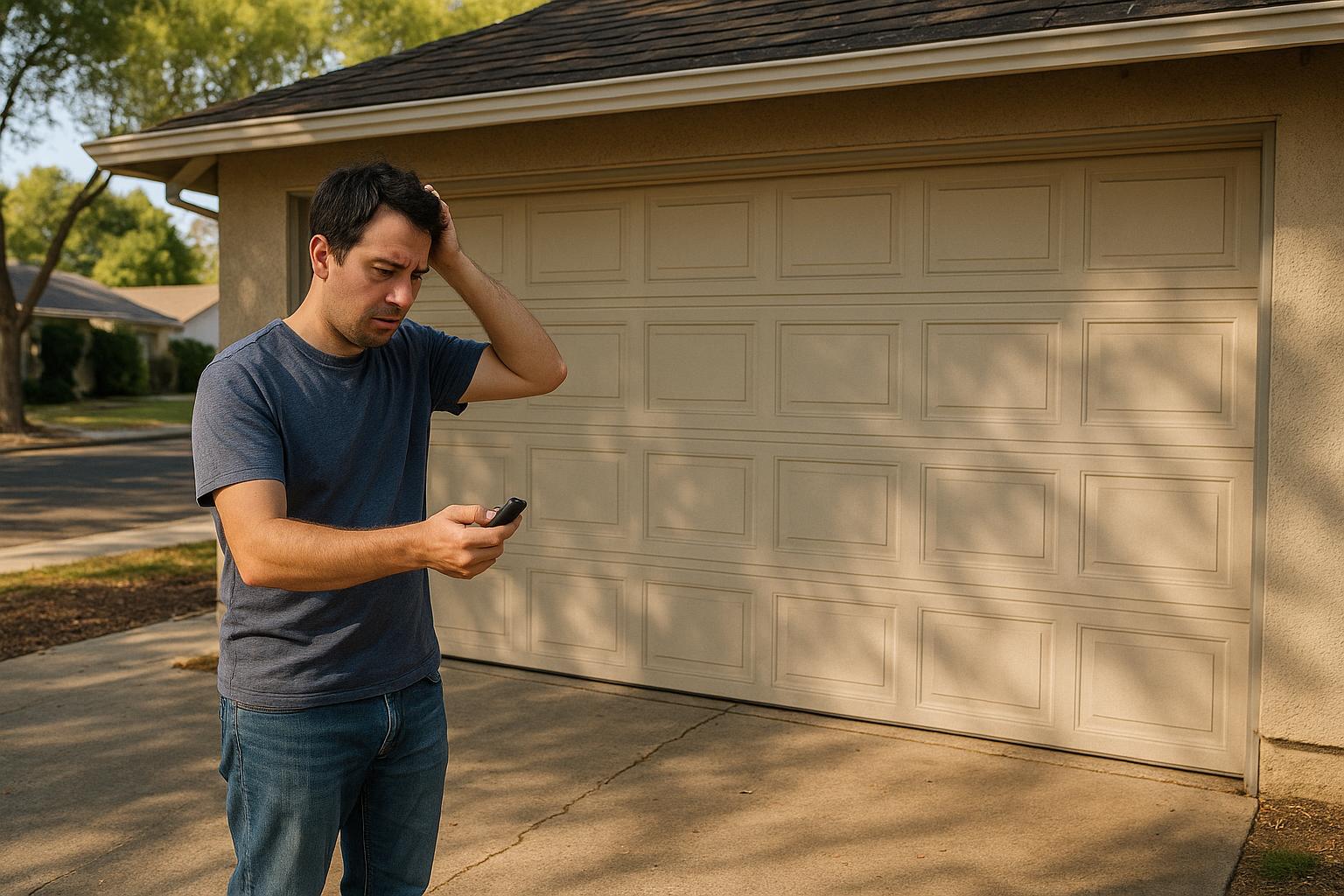
A Stuck Garage Door Is More Than Just an Inconvenience
You're running late for work, you press the button on your garage door opener, and nothing happens. Or maybe your garage door starts to move and then reverses on its own. Few household problems are as immediately frustrating as a garage door that refuses to cooperate.
For homeowners in Kingsburg and the surrounding Central Valley, the garage door is often the most-used entry point to the home. When it stops working, it can leave your car trapped inside, your home less secure, and your schedule in chaos. The good news is that many garage door problems have straightforward causes — and some you can even troubleshoot yourself before calling in a professional.
Check the Obvious First: Power and Remote Issues
Before you assume the worst, start with the basics. You'd be surprised how often the fix is simpler than you think.
- Dead remote batteries: Replace the batteries in your garage door remote or keypad. This is the single most common reason a garage door seems unresponsive.
- Unplugged opener: Check that your garage door opener unit is plugged into the outlet on the ceiling. It can get accidentally unplugged, especially after a power outage or if someone was working in the garage.
- Tripped breaker or blown fuse: Head to your electrical panel and see if the breaker for the garage has tripped. Reset it and try again.
- Wall switch malfunction: If the remote doesn't work but the wall switch does (or vice versa), the problem is likely with that specific control rather than the opener itself.
If none of these solve the issue, it's time to look a little deeper.
Inspect the Safety Sensors
Every modern garage door opener has photo-eye safety sensors mounted near the bottom of the door tracks on either side. These sensors shoot an invisible beam across the doorway, and if anything breaks that beam — a bike, a trash can, a pet — the door won't close.
Common sensor problems include:
- Misalignment: If one sensor gets bumped, the beam won't connect. Look for a blinking light on one or both sensors. Gently adjust them until both indicator lights are solid.
- Dirty lenses: Dust, cobwebs, and dirt can block the sensor beam. Wipe the lenses with a soft cloth.
- Sun interference: In Kingsburg, our strong Central Valley sun can sometimes overwhelm the sensor's infrared beam during certain times of day. A small shade or cardboard shield over the sensor can help.
- Damaged wiring: If the wires running from the sensors to the opener are frayed, cut, or disconnected, the system won't function. This is a repair best left to a professional.
Look at the Tracks and Rollers
Your garage door rides along metal tracks on either side. If those tracks are bent, obstructed, or misaligned, the door can get stuck partway or refuse to move at all.
Run your eye along the full length of both tracks. Look for visible dents, gaps between the track and the wall, or debris caught in the track. Small obstructions can sometimes be cleared by hand, but bent tracks should be repaired by a trained technician. Attempting to force a door along a damaged track can cause further damage to the door panels, rollers, and even the opener.
While you're at it, check the rollers — the small wheels that sit inside the tracks. Worn, cracked, or broken rollers can cause the door to bind or move unevenly. Nylon rollers tend to last longer and run more quietly than steel ones, and replacing them is a common maintenance task our team handles for homeowners throughout Kingsburg, Selma, and Reedley.
The Door Might Be in Manual Mode
Every garage door opener has an emergency release cord — usually a red handle hanging from the opener rail. If this cord has been pulled, your door is disconnected from the opener and is in manual mode. The opener will run, but the door won't move with it.
To reconnect it, simply pull the release handle toward the opener (or in the direction indicated in your owner's manual) and then activate the opener. The trolley should re-engage, and the door will operate normally again. If you're unsure how to do this safely, especially with a heavy door, don't hesitate to ask for help.
When the Problem Is the Opener Itself
If you've ruled out the remote, sensors, tracks, and manual mode, the issue may be with the garage door opener motor or its internal components. Signs that your opener is failing include:
- The motor hums or buzzes but the door doesn't move
- The opener light blinks a specific number of times (this is often a diagnostic code — check your owner's manual)
- The door moves a few inches and then stops
- The opener works intermittently
Garage door openers typically last 10 to 15 years, depending on usage and maintenance. If yours is aging and giving you repeated trouble, it may be more cost-effective to replace it rather than continue repairing it. Modern openers are quieter, more energy-efficient, and come with features like smartphone connectivity and battery backup — a real advantage during the occasional Central Valley power shutoff.
Don't Overlook Broken Springs or Cables
If your garage door feels extremely heavy when you try to lift it manually, or if it opens a few inches and then slams back down, you may have a broken spring or cable. This is a serious issue. Garage door springs are under enormous tension, and attempting to repair or replace them yourself can result in severe injury.
If you suspect a broken spring or cable, stop using the door immediately and call a professional. Our team at Kingsburg Garage Door handles spring and cable replacements regularly for customers in Kingsburg, Fowler, Parlier, Dinuba, and the surrounding area, and we can usually get to you the same day.
Preventive Steps to Avoid Future Lockouts
Once your garage door is back in working order, a few simple habits can help prevent future problems:
- Test the door monthly. Open and close it a few times and listen for unusual sounds or hesitation.
- Lubricate moving parts. Apply a silicone-based lubricant to the rollers, hinges, and springs every six months.
- Keep tracks clean. Wipe down the inside of the tracks periodically to remove dust and debris.
- Check sensor alignment. Give the sensors a quick visual check every few weeks.
- Schedule annual maintenance. A professional tune-up once a year can catch small issues before they become big, expensive ones.
When to Call a Professional in Kingsburg
Some garage door issues are safe to troubleshoot on your own. But if you're dealing with broken springs, damaged tracks, opener motor failure, or anything that involves the door's tension system, it's time to call in an expert.
At Kingsburg Garage Door, we provide fast, honest service to homeowners and businesses throughout the Central Valley. Whether your door is stuck open, stuck closed, or acting unpredictably, we'll diagnose the problem and give you a clear, upfront explanation of what it takes to fix it. No surprises, no pressure — just reliable work from a team that treats you like a neighbor.
If your garage door isn't cooperating, give us a call. We'll get it moving again.