
That Noise Isn't Normal — Here's What Your Garage Door Is Telling You
You press the button on your garage door opener, and instead of the smooth, quiet operation you're used to, you hear grinding, squealing, rattling, or banging. It's unsettling, and for good reason. Strange garage door noises are almost always a sign that something needs attention — and ignoring them can lead to bigger, more expensive problems down the road.
If you're a homeowner in Kingsburg or the surrounding Central Valley area, your garage door works hard year-round. Between the hot summers and cool, damp winters, the components of your door system go through a lot. Let's break down the most common garage door noises, what causes them, and what you should do about each one.
Squealing or Screeching Sounds
A high-pitched squeal when your garage door moves is one of the most common complaints we hear from customers. In most cases, this noise points to one of two issues:
- Lack of lubrication: The rollers, hinges, and tracks need regular lubrication to operate smoothly. Over time, the lubricant dries out or collects dust and debris, causing metal-on-metal friction. This is especially common in Kingsburg, where dust from agricultural activity can accumulate quickly on garage door hardware.
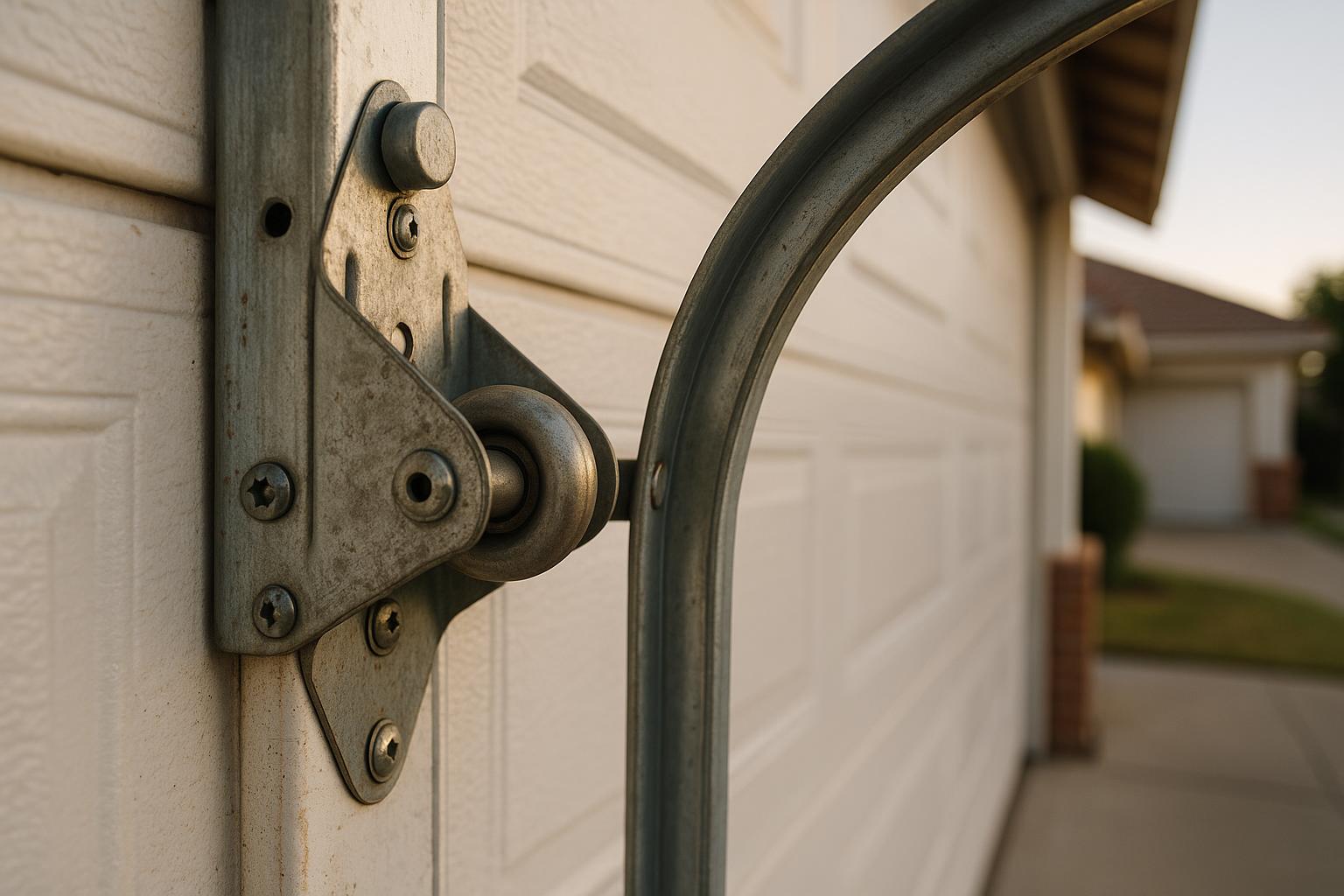
- Worn-out rollers: If your door uses metal rollers (rather than nylon), they tend to get noisier as they age. Worn rollers can also cause the door to move unevenly, putting extra strain on the entire system.
What You Can Do
Start by applying a garage door-specific lubricant (not WD-40, which is a solvent, not a lubricant) to the rollers, hinges, springs, and tracks. If the noise persists after lubrication, the rollers may need to be replaced. Upgrading to nylon rollers is a popular and affordable fix that dramatically reduces noise.
Grinding or Scraping Noises
A grinding sound usually means something is rubbing where it shouldn't be. Common causes include:
- Misaligned tracks: If the metal tracks that guide your door have shifted or become bent, the door can scrape against them as it moves. This creates a harsh grinding noise and can cause uneven wear on the door panels.
- Debris in the tracks: Small rocks, leaves, or hardened dirt in the tracks can obstruct the rollers and cause grinding. This is a simple fix but one that's easy to overlook.
- Opener gear issues: If the grinding seems to come from the motor unit itself, the drive gear inside your garage door opener may be wearing out. This is a common issue with older chain-drive openers.
What You Can Do
Visually inspect the tracks for obvious bends, gaps, or debris. You can clean the tracks with a damp cloth, but avoid using lubricant directly inside the tracks — this can actually cause the rollers to slip. If the tracks are misaligned or the opener gear is failing, it's best to call a professional. Attempting to realign tracks or disassemble an opener without experience can create safety hazards.
Rattling or Vibrating Sounds
Rattling is often the easiest noise to diagnose and fix. It typically means something is loose. Over time, the constant vibration of a moving garage door can loosen nuts, bolts, and screws throughout the system.
- Loose hardware: Check the brackets that hold the tracks to the wall and ceiling, the hinges connecting the door panels, and the bolts on the opener mounting bracket.
- Loose chain or belt: If you have a chain-drive opener, a loose chain will slap and rattle during operation. Belt-drive openers can also develop slack over time.
What You Can Do
Grab a socket wrench and tighten any visibly loose hardware. Be careful not to overtighten, as this can strip the threads or crack the mounting points. If the chain or belt on your opener needs adjustment, consult your owner's manual for the correct tension specifications, or have a technician handle it.
Banging or Popping Sounds
A loud bang or pop when the door starts moving is more concerning. This noise often indicates:
- Torsion spring issues: The torsion springs above your door are under enormous tension. When they start to wear or shift, they can make popping or banging sounds as the door moves. This is a serious issue — a failing torsion spring can snap without warning.
- Panel problems: If a door panel has become warped, cracked, or shifted, it can pop or bang as it flexes during movement. This is more common with older wooden doors or doors that have sustained impact damage.
- Opener force settings: Sometimes the opener's force settings are too high, causing the door to slam into the fully open or fully closed position with excessive force.
What You Can Do
Do not attempt to adjust or repair torsion springs yourself. These components are under extreme tension and can cause serious injury if handled improperly. If you suspect a spring issue, call a qualified garage door technician. For opener force settings, most modern openers have adjustment dials or digital settings that you can fine-tune according to the manufacturer's instructions.
When to Call a Professional
Some garage door maintenance — like lubrication, tightening loose bolts, and cleaning the tracks — is perfectly safe for homeowners to handle. But other repairs require professional expertise and specialized tools. Here's a good rule of thumb:
- DIY-friendly: Lubrication, cleaning tracks, tightening hardware, replacing weather stripping
- Call a pro: Spring replacement, track realignment, opener motor repair, cable replacement, panel replacement
At Kingsburg Garage Door, we regularly help homeowners in Kingsburg, Selma, Fowler, Parlier, Reedley, and Dinuba diagnose and fix noisy garage doors. In many cases, a simple maintenance visit can resolve the issue and extend the life of your door system by years.
Preventive Maintenance Keeps Things Quiet
The best way to avoid unexpected garage door noises — and the problems behind them — is regular preventive maintenance. We recommend having your garage door professionally inspected and serviced at least once a year. During a maintenance visit, a technician will:
- Lubricate all moving parts
- Inspect and tighten hardware
- Check spring tension and condition
- Test the opener's safety features and force settings
- Inspect cables, rollers, and tracks for wear
- Ensure the door is properly balanced
Think of it like an oil change for your car. A small investment in regular maintenance prevents costly breakdowns and keeps everything running smoothly and quietly.
Don't Ignore the Noise
A noisy garage door is more than just an annoyance — it's a warning sign. Whether it's a minor issue like dry rollers or a major concern like a failing spring, addressing the problem early saves you money, prevents safety hazards, and keeps your garage door operating reliably for years to come.
If your garage door has started making sounds that don't seem right, give Kingsburg Garage Door a call. We'll come out, diagnose the issue, and give you honest advice on the best path forward — no pressure, no unnecessary upsells. Just straightforward service from a team that treats every customer like a neighbor.